Open article contents
Article Contents
Pillar Guide
New Capital Investment GuideQuick Answer
A mixed-use tower investment can benefit from several compatible uses supporting activity across the day, but the value depends on planning and operations. Offices, retail, medical, hospitality, parking, deliveries, visitors, and residents or guests must have suitable access, security, services, and circulation. More uses do not automatically mean more demand; the uses must reinforce rather than obstruct one another.
Key Takeaways
What matters before you compare offers.
Mixed-use value comes from compatible demand and shared infrastructure.
Separate arrival, servicing, privacy, and security needs must be planned clearly.
The tenant mix should serve real users rather than fill a brochure.
Parking, elevators, loading, waste, and peak-hour movement can decide performance.
Operations and governance become more important as the use mix becomes more complex.
Evaluate the exact unit inside the ecosystem, not the tower concept alone.
Concept
Why different uses can support one another
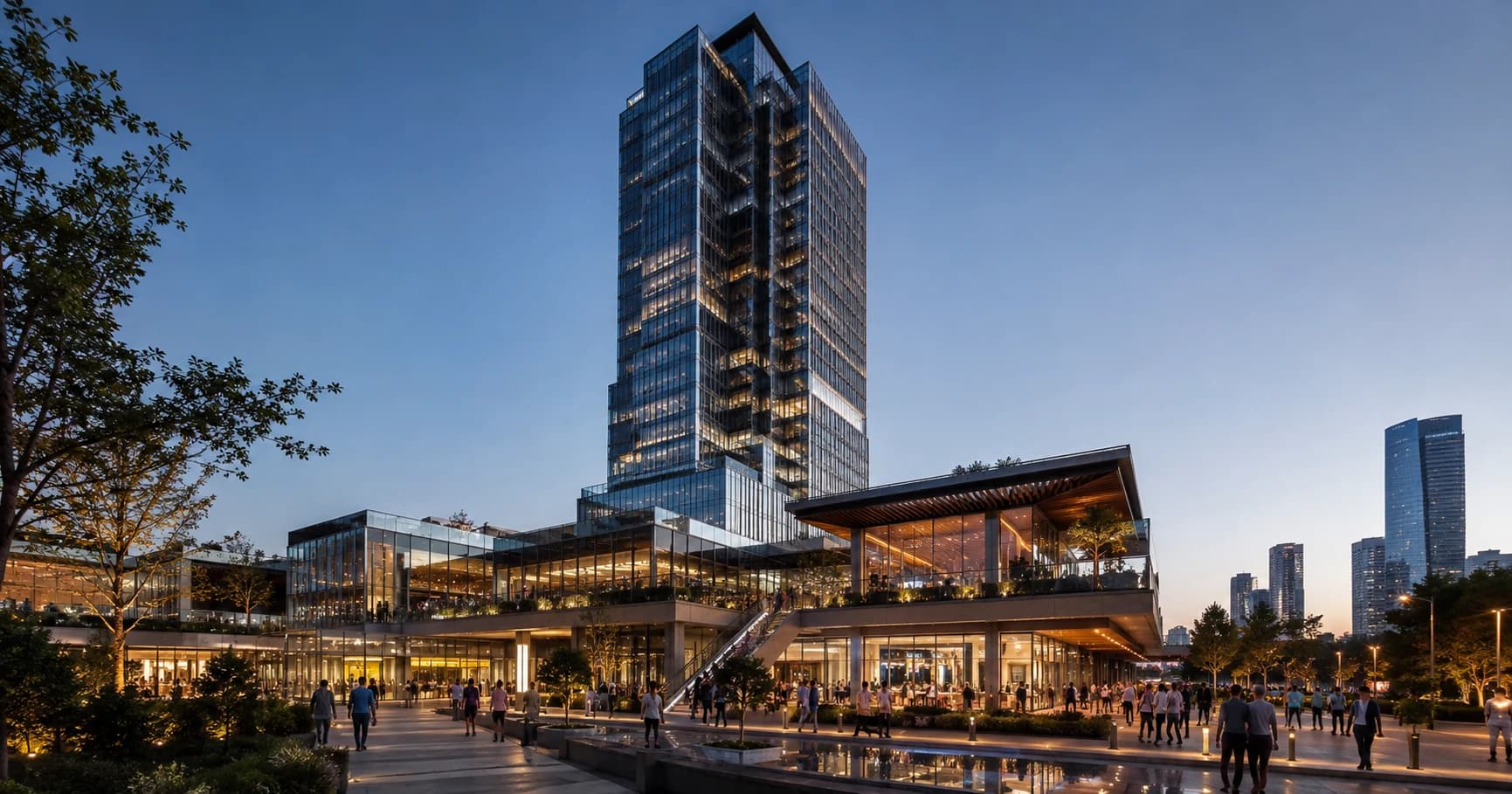
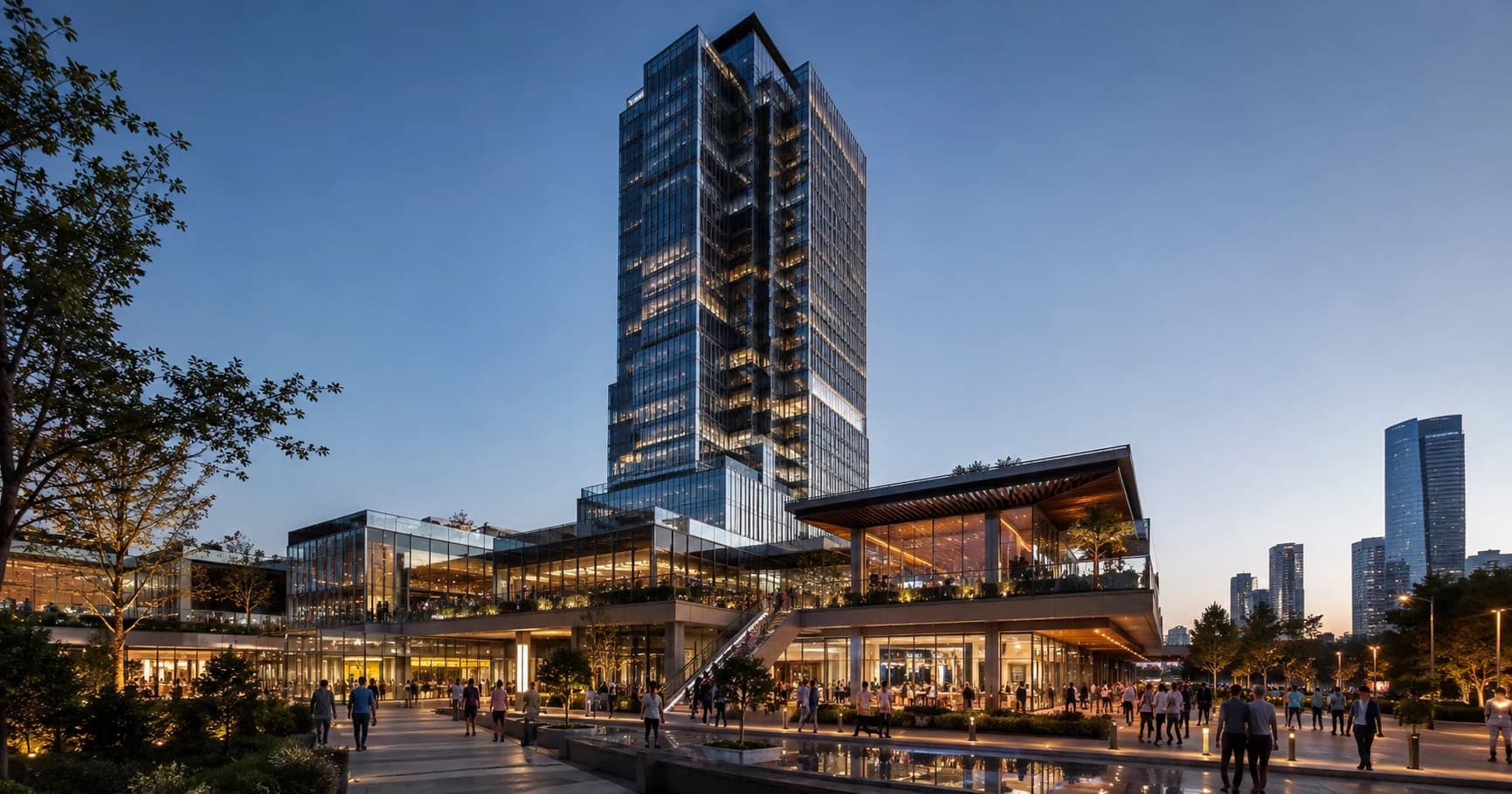
A mixed-use tower combines more than one function within one development. The mix may include administrative offices, commercial space, medical units, hospitality, serviced space, or other uses allowed by the project. The investment idea is that each use can contribute people, services, and activity to a shared location.
An office population can support cafés, convenience retail, and business services during working hours. Hospitality can add evening and visitor activity. Medical uses can create regular appointments and professional demand. Retail can make the building more convenient for occupants. When these relationships are planned well, the tower can feel active for longer periods and offer tenants more reasons to choose the address.
However, synergy should not be assumed. A use that generates noise, deliveries, queues, or heavy public movement may conflict with a use that requires privacy, calm, or controlled access. The development must resolve these differences through zoning, separate routes, operating rules, and management.
Movement
Circulation is the hidden structure of mixed-use value
Investors should study how each user enters, parks, moves vertically, receives deliveries, and exits. Shared entrances can create energy and visibility, but they can also cause congestion or reduce privacy. Separate entrances can protect each use, but they need clear wayfinding and efficient staffing.
Elevator zoning is particularly important in a tower. Office workers, retail visitors, patients, hotel guests, service staff, and deliveries may have different peak periods and security requirements. Ask which lifts serve which floors, how waiting times are managed, whether service lifts are separate, and what happens during maintenance or emergency operation.
Parking allocation should also be tested by use and time. Office demand may peak during the working day, while hospitality or dining may peak later. That can create useful sharing, but only when access rights, validation, visitor handling, and capacity are managed. A total parking number without allocation rules is incomplete information.
Practical checks
- Trace each user type from street to unit.
- Check separate public, tenant, patient, guest, and service routes where relevant.
- Review elevator zoning, peak demand, and backup arrangements.
- Confirm parking allocation, visitor procedures, loading, and waste routes.
Tenant Mix
The right mix is based on user needs
A credible tenant-mix plan begins with the building's likely users. Business tenants may need meeting spaces, food, banking, printing, logistics, or wellness services. Medical users may need pharmacies, diagnostics, accessible drop-off, and privacy. Hospitality users value food, transport, concierge services, and a consistent guest environment.
The mix should avoid excessive duplication. Too many similar retail units can divide limited demand, while unrelated categories may fail to support one another. Ask who controls leasing, whether uses are curated, how incompatible activities are restricted, and how vacant units are handled during early occupancy.
Anchor uses can help create confidence, but the investor should verify their status and contractual certainty. A proposed operator, brand, or tenant should not be treated as committed unless current official documentation supports the claim.
Governance
Complex buildings need clear operating rules
Mixed-use assets require coordination across cleaning, security, access, fire and life safety, HVAC, signage, common areas, events, deliveries, noise, waste, and maintenance. Different zones may have different operating hours and service expectations. The management structure should explain who sets rules, who enforces them, and how costs are allocated.
Service-charge allocation deserves attention because some systems or amenities benefit one use more than another. Investors should request the method rather than relying on an early estimate. They should also ask how reserve funds, major repairs, insurance, and shared-area upgrades will be governed.
A strong operator can protect the experience across the tower. A weak or unclear management model can turn a compelling concept into daily friction. The contract, management agreement, and owners' rules are therefore part of investment due diligence, not administrative details to review after purchase.
Unit-Level Test
Judge the exact unit inside the larger ecosystem
A successful tower does not make every unit equally attractive. A retail unit may be outside the strongest movement path. An office may sit near a busy public zone. A clinic may have an awkward patient route. A hospitality unit may depend on an operator and revenue structure that require separate analysis.
Review the unit's floor, frontage, orientation, distance from the core, nearby uses, acoustic conditions, servicing, signage rights, and fit-out limitations. Then connect those details to the expected user. The tower concept is useful only when the unit can capture its benefits without carrying disproportionate disadvantages.
Finally, compare the unit with simpler alternatives. A single-use office building may offer easier management. A street retail unit may provide clearer frontage. Mixed-use is not always better; it is better when the complexity produces useful demand and is governed professionally.
Decision Table
Mixed-use synergy or conflict?
This table helps test whether the use mix reinforces the investment case.
| Interaction | Potential benefit | Potential conflict | What to verify |
|---|---|---|---|
| Offices + retail | Daily workforce supports services and food | Retail noise, delivery, or weak customer access | Frontage, zoning, hours, tenant mix |
| Medical + retail | Pharmacy and convenience can support patients | Privacy, queues, waste, and infection-control needs | Access, permitted uses, servicing |
| Hospitality + retail | Guests add evening and visitor demand | Guest privacy and inconsistent public areas | Separate arrival, operator standards |
| Shared parking | Different peak times may improve utilization | Capacity, allocation, and validation disputes | Rights, management, peak analysis |
| Shared systems | Efficient infrastructure and unified operations | Cost allocation and service-level conflict | Management agreement and budgets |
Investor Checklist
Mixed-use tower review
Use this checklist to test the ecosystem and the exact unit.
Map the uses
List every confirmed use, its floors, entrances, hours, and main user groups.
Trace circulation
Review public, tenant, patient, guest, staff, delivery, waste, and emergency routes.
Test compatibility
Identify noise, privacy, security, queue, odor, loading, and operating-hour conflicts.
Review tenant control
Ask who curates the mix, approves activities, and manages competing categories.
Understand governance
Review management responsibility, service-charge allocation, rules, and dispute processes.
Inspect the unit
Connect floor, frontage, core distance, nearby uses, and fit-out rules to the intended tenant.
Risk Control
Common mistakes to avoid.
Assuming more unit types automatically create stronger demand.
Ignoring conflicts between public, private, medical, office, and hospitality users.
Reviewing the parking total without allocation and peak-use rules.
Treating an unconfirmed operator or anchor tenant as secured.
Buying a weak unit because the overall tower concept looks impressive.

About the Author
AIG Editorial Team
This guide was prepared by the Aliaa Investments Global editorial team to help investors organize their questions around development, intelligent real estate, delivery, operations, and long-term asset quality. Project-specific decisions should use current documents and qualified professional advice.
About Aliaa Investments GlobalReferences
Sources and first-party context.
These sources support the public context used in this article. Prices, availability, schedules, legal status, and project specifications can change and should be verified directly before a decision.
FAQs
Questions about mixed-use tower investment.
What is a mixed-use tower in the New Capital?
It is a tower that combines multiple permitted functions, such as offices, retail, medical, hospitality, or serviced space. The uses may share infrastructure and activity, but they need suitable zoning, circulation, security, servicing, parking, management, and operating rules.
Are mixed-use towers good investments?
They can be when the uses create compatible demand and the building is managed professionally. Investors should verify access, tenant mix, parking, elevators, service routes, operating responsibilities, costs, delivery, and the exact unit's relationship to other uses. Complexity can add value or risk.
What should I check in a mixed-use project?
Check confirmed uses, floor zoning, entrances, vertical circulation, parking allocation, loading, waste, signage, operating hours, life safety, tenant curation, management agreements, service-charge allocation, operator commitments, construction progress, and the exact unit's fit for its intended user.
Is mixed-use better than a single-use building?
Not in every case. Mixed-use may offer stronger convenience and activity, while a single-use building may provide simpler circulation, governance, and tenant positioning. Compare the demand and operating case for the exact asset rather than assuming one format is universally superior.
Related Reading
Continue through the New Capital Investment cluster.
Start with the pillar for the complete framework, then use the related cluster guides for focused decisions.
New Capital Investment Guide
A practical guide for investors evaluating Egypt’s New Administrative Capital, CBD growth, smart towers, mixed-use projects, risk factors, and long-term real estate value.
Location Strategy
New Capital CBD Investment: What Actually Drives Value?
Understand the location, accessibility, business activity, building operations, and delivery factors that shape New Capital CBD investment decisions.
Unit Comparison
Commercial vs Administrative Units in New Capital
Compare commercial and administrative units in the New Capital by demand source, operating needs, visibility, tenant profile, risk, and exit strategy.
Intelligent Real Estate
Smart Tower Investment in Egypt: What Systems Matter?
A practical guide to evaluating smart tower investment in Egypt through building management, energy, security, maintenance, data, and operating quality.
Test the whole ecosystem before choosing one unit
Review use compatibility, circulation, operations, tenant mix, and the exact unit position before comparing payment terms.