Open article contents
Article Contents
Pillar Guide
New Capital Investment GuideQuick Answer
New Capital infrastructure matters to real estate because transport, government activity, business districts, utilities, smart services, public spaces and daily city operations can influence accessibility and demand. But infrastructure progress is not the same as a guaranteed property return. Investors should connect each city-level milestone to the exact asset: who uses it, how access improves, what services are operational, when surrounding activity becomes meaningful, and whether the purchase price already assumes future benefits.
Key Takeaways
What matters before you compare offers.
This page owns the New Capital infrastructure-investment intent; the CBD page keeps its location-specific commercial-district query.
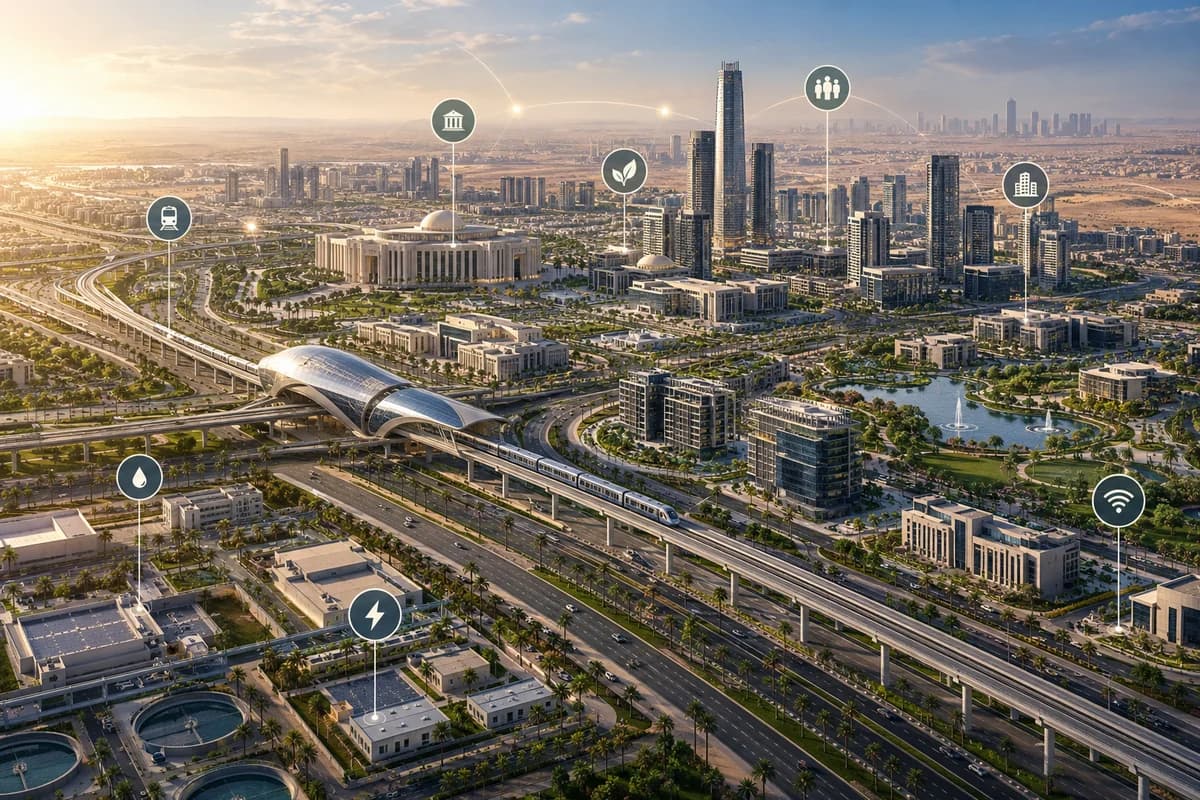
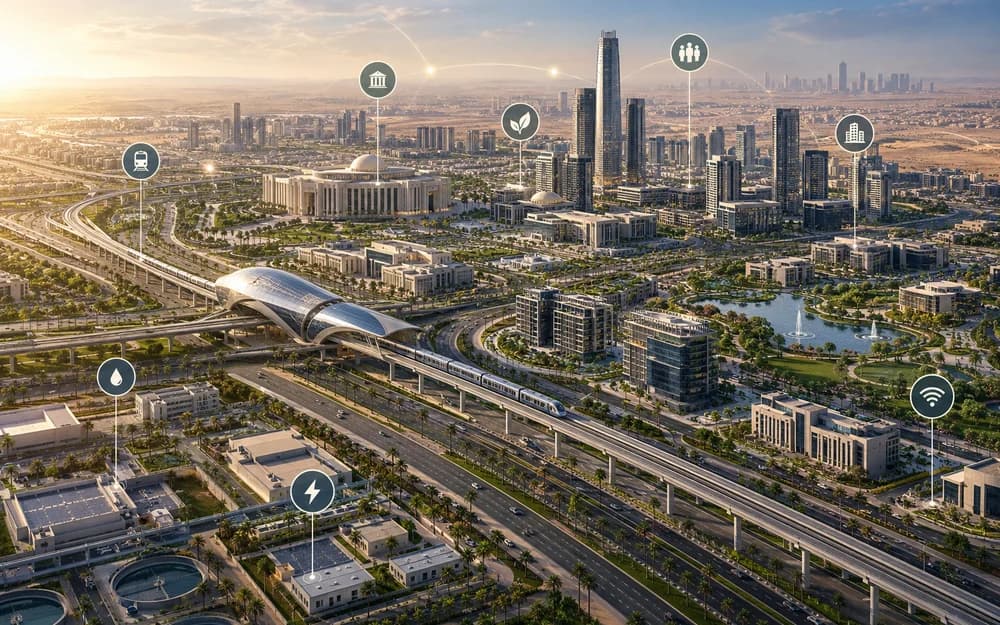
ACUD presents the New Capital as a smart, sustainable city with government, business, digital, utility, transport and green-space systems.
Government relocation, transport operations and growing services can support city activity, but they do not guarantee rent, occupancy, yield or resale value for every project.
The East Nile Monorail was inaugurated in March 2026 according to Egypt's State Information Service, adding a dated transport milestone rather than a future-only claim.
Infrastructure should be evaluated through practical travel time, user movement, service reliability, district activity and operating maturity.
Entry price matters: an investor can overpay for an infrastructure story if future benefits are already fully priced into the unit.
Transport
Transport creates value only when it improves real user movement
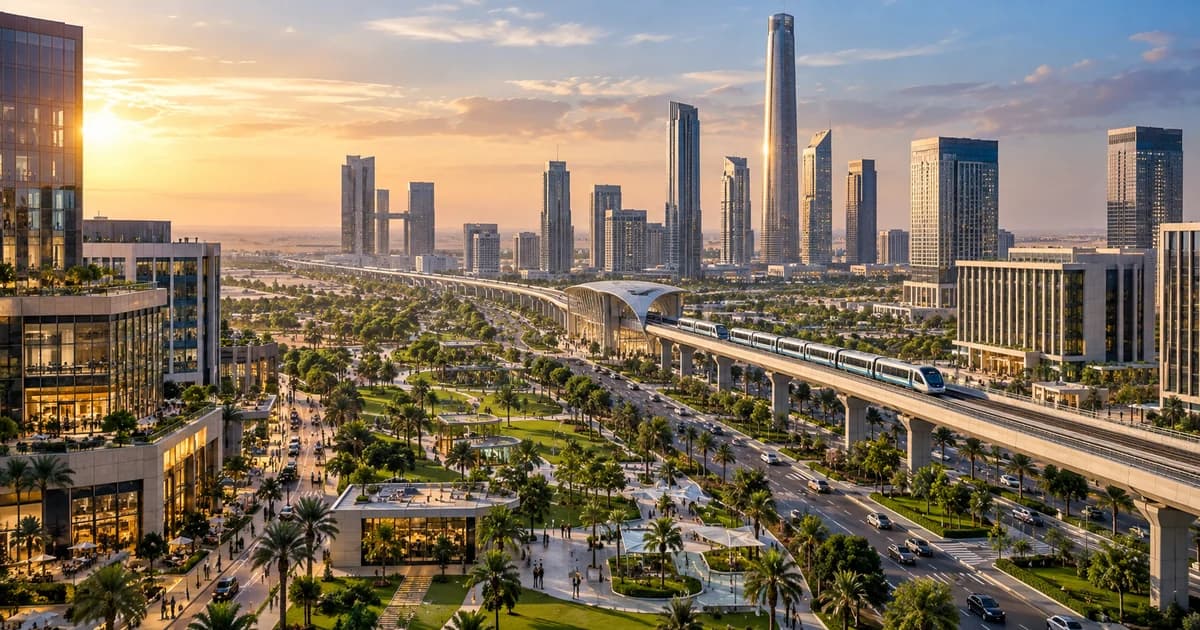
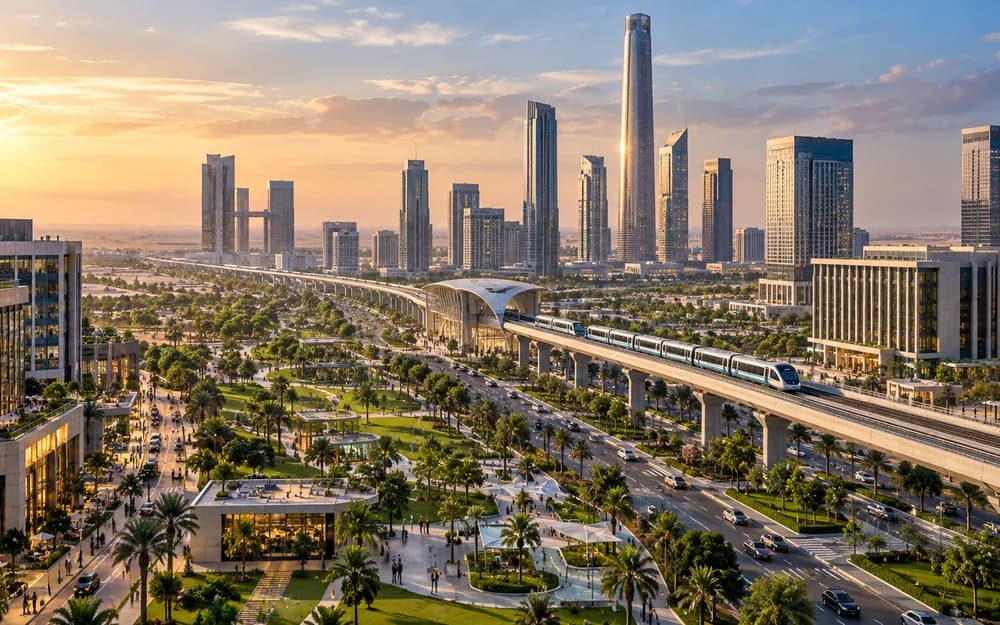
Transport announcements are easy to market because stations, monorails and major roads are visible symbols of city growth. The investor question is more specific: does the infrastructure reduce the time and friction for the people who would actually use the property? An office user cares about staff and client access. A medical unit cares about patient arrival and accessibility. Retail depends on customer movement and parking. Hospitality depends on convenient regional and local connections.
Egypt's State Information Service reported the inauguration of the East Nile Monorail in March 2026, providing a current operational milestone rather than a purely proposed connection. ACUD also promotes New Capital transport and smart-service initiatives. Investors should map the exact property to road access, transit nodes, drop-off, pedestrian routes and parking rather than assuming a city-level transport project benefits every plot equally.
The most useful test is before-and-after practicality. If the infrastructure makes a tenant's commute, customer journey or business connection materially easier, it can support demand. If the property remains difficult to reach from the user's perspective, the headline infrastructure story may have limited effect on that unit.
Activity Base
Government and business activity can deepen demand—but location still decides who benefits
ACUD's published milestones identify the government relocation as a major stage in the city's development, while the New Capital contains government, business, residential, cultural and educational functions. The presence of employees, visitors, companies and service providers can build recurring movement that supports offices, retail, healthcare, hospitality and other property uses.
However, demand is not evenly distributed across the city. An office beside a strong business cluster can compete differently from one in a low-activity location. A retail unit near a public entrance or high-frequency route can behave differently from one hidden inside a large project. Investors should therefore translate city growth into micro-location evidence: surrounding occupiers, access, visibility, parking, operational phases and complementary uses.
CSCEC's ongoing CBD work and the growing portfolio of major business projects provide useful context for the city's commercial center, but they should not be used to claim a guaranteed outcome for unrelated units. The correct link is from infrastructure and activity to a specific user base, then from user demand to the unit's economics.
Smart City Operations
Digital services and utilities matter after the ribbon cutting
A city becomes investable through daily reliability as much as through landmark construction. ACUD's current platform highlights smart services and digital portals for residents, owners and developers, while its corporate material describes utility, water, transport and data-management partnerships. For property users, those systems can influence how efficiently the city is managed and how predictable everyday operations become.
Investors should ask practical questions: Is permanent power available? How are water, district cooling or other utilities managed where relevant? Is telecommunications infrastructure ready? How are maintenance requests handled? Are roads, landscaping, public spaces, parking and waste services operational around the project? Is the building connected to the required municipal systems at handover?
The answer can differ by district and project phase. Do not treat a city-level smart-service announcement as proof that an individual building is already fully connected. Project utility letters, authority approvals, commissioning records and operator documentation remain the relevant evidence.
Public Realm
Green space and public realm can support quality of place, not automatic returns
ACUD's New Capital material emphasizes green and sustainable design, public spaces and the Green River as part of the city concept. Public realm can influence how attractive an area feels to residents, employees, visitors and companies, especially when walkability, shade, landscaping, retail, transport and civic uses reinforce one another.
From an investment perspective, public realm should be evaluated as one input to user preference rather than as a guaranteed price driver. Ask whether the exact project has usable access to parks or plazas, whether the surrounding streets are completed, whether ground-floor activity is operating, and whether the public space connects naturally to the building's entrances and daily circulation.
A beautiful masterplan image can show future intent, but operational public space is more valuable evidence. Dated site visits, official virtual tours, completed streets and active services help an investor distinguish a functioning district from a future concept.
Investment Translation
Turn each infrastructure milestone into a property-level question
When a new transport line, government facility, business district, park or utility milestone is announced, investors should ask four questions. First, which user group does it affect? Second, how does it change access or activity for the exact property? Third, when is the benefit operational rather than planned? Fourth, is the expected benefit already reflected in the purchase price?
This avoids double counting. A premium location may deserve a higher price because infrastructure and activity are stronger, but paying the premium and then assuming the same infrastructure will create a second automatic uplift can overstate the investment case. The ROI page should model the return with conservative assumptions rather than converting infrastructure news into a fixed growth rate.
The strongest infrastructure-led opportunity is one where the urban system and the asset reinforce each other: the right users can reach the building, the surrounding district is active, services are reliable, the unit supports its intended use, and the purchase economics still make sense after costs and risk.
Decision Table
Infrastructure signal vs property-level evidence
Connect city progress to the exact investment rather than assuming every project benefits equally.
| City-level signal | Property-level question | Evidence |
|---|---|---|
| Monorail or transport milestone | Does it materially improve the user's journey to this building? | Station/road map, travel route, operational access |
| Government relocation | Which users or businesses gain from proximity? | Actual occupiers, visitor patterns, district activity |
| CBD growth | Is the property inside the relevant business catchment? | Micro-location, surrounding buildings, access and visibility |
| Smart-city services | Is the building connected and operational at handover? | Utility approvals, commissioning, operator documentation |
| Green/public realm | Does the project have usable, completed access to the amenity? | Dated site evidence, official maps and operating public space |
Investor Checklist
New Capital infrastructure investor checklist
Use city-level progress as a starting point, then verify property-level impact.
Map the user journey
Test roads, transit, drop-off, parking and pedestrian movement for the exact tenant or customer.
Verify operational status
Separate inaugurated, operating infrastructure from projects that are still planned or incomplete.
Check utility readiness
Confirm permanent power, water, telecoms, cooling or other required services for the exact building.
Observe surrounding activity
Look for occupied offices, services, retail, residences and public facilities rather than masterplan images alone.
Test micro-location
Measure visibility, frontage, nearby entrances and practical access within the wider district.
Avoid double counting
Do not pay a location premium and then assume the same infrastructure creates guaranteed appreciation.
Risk Control
Common mistakes to avoid.
Treating every announced infrastructure project as fully operational today.
Assuming city-level transport benefits every plot equally.
Using government or CBD activity as a substitute for unit-level tenant demand.
Ignoring permanent utilities, building commissioning and local service readiness at handover.
Converting infrastructure progress into a guaranteed rent, yield or appreciation percentage.
About the Author
AIG Editorial Team
This guide was prepared by the Aliaa Investments Global editorial team to help investors organize their questions around development, intelligent real estate, delivery, operations, and long-term asset quality. Project-specific decisions should use current documents and qualified professional advice.
About Aliaa Investments GlobalReferences
Sources and first-party context.
These sources support the public context used in this article. Prices, availability, schedules, legal status, and project specifications can change and should be verified directly before a decision.
ACUD — New Capital
Official smart-city, services and urban-system context.
ACUD — About
Official milestones including government relocation and smart-city evolution.
ACUD — Virtual Tour
Official visual context for the CBD, government district, residential areas, Green River and other city locations.
Egypt State Information Service — East Nile Monorail
March 2026 government source for the inauguration of the East Nile Monorail and Green River area.
Egypt State Information Service — ACUD Operations
January 2026 context on services, utilities, maintenance, green space and growing city activity.
CSCEC — New Capital CBD Aerial View
Official construction context for major New Capital CBD buildings.
AIG — New Capital CBD Investment
Internal page for the narrower CBD value-driver intent.
FAQs
Questions about new capital infrastructure & investment.
How does infrastructure affect New Capital real estate investment?
Infrastructure can influence accessibility, daily activity, user convenience, operating reliability and district attractiveness. Investors should connect each transport, utility, government, business or public-realm milestone to the exact property's user and micro-location rather than assume a universal return effect.
Is the New Capital monorail operating?
Egypt's State Information Service reported the inauguration of the East Nile Monorail in March 2026. Investors should still map the exact project to relevant stations, roads and last-mile access to understand whether the transport link materially improves the property.
Does more infrastructure guarantee higher property ROI?
No. Infrastructure can strengthen demand conditions, but ROI depends on the price paid, property type, tenant demand, operating cost, delivery, occupancy, holding period and exit value. Use the infrastructure story as one input, not a guaranteed return assumption.
Is this the same as the New Capital CBD investment article?
No. The CBD article owns the specific Central Business District location-intent. This page owns the wider New Capital infrastructure, transport, smart services and city-operations intent, with internal links between the two rather than duplicated coverage.
Related Reading
Continue through the New Capital Investment cluster.
Start with the pillar for the complete framework, then use the related cluster guides for focused decisions.
New Capital Investment Guide
A practical guide for investors evaluating Egypt’s New Administrative Capital, CBD growth, smart towers, mixed-use projects, risk factors, and long-term real estate value.
Location Strategy
New Capital CBD Investment: What Actually Drives Value?
Understand the location, accessibility, business activity, building operations, and delivery factors that shape New Capital CBD investment decisions.
Unit Comparison
Commercial vs Administrative Units in New Capital
Compare commercial and administrative units in the New Capital by demand source, operating needs, visibility, tenant profile, risk, and exit strategy.
Intelligent Real Estate
Smart Tower Investment in Egypt: What Systems Matter?
A practical guide to evaluating smart tower investment in Egypt through building management, energy, security, maintenance, data, and operating quality.
Connect city infrastructure to the exact asset
Use transport, utilities, district activity and smart-city progress to improve your questions—then verify the exact property's access, user demand and economics.