Open article contents
Article Contents
Quick Answer
AIG identifies Honeywell as AI Tower's technology partner. AIG's current project page says the tower's intelligent infrastructure is intended to connect building operations, security, energy, maintenance, and occupant experience. That is the useful public headline. Detailed subsystem models, performance guarantees, final commissioning scope, and service-level obligations should be confirmed from current technical documents rather than inferred from the partnership name.
Key Takeaways
What matters before you compare offers.
AIG publicly identifies Honeywell as AI Tower's technology partner.
The stated technology concept connects operations, security, energy, maintenance, and occupant experience.
The June 2026 launch coverage described Honeywell's role around smart-building technology, building management, and digital transformation solutions.
Smart-building value depends on integration, commissioning, data quality, controls, and long-term maintenance—not a label alone.
Exact product models, performance guarantees, cybersecurity architecture, and operating SLAs are not fully detailed in the supplied public sources.
Use the broader smart-tower investment guide for a vendor-neutral evaluation framework.

Partnership
What the Honeywell partnership says today
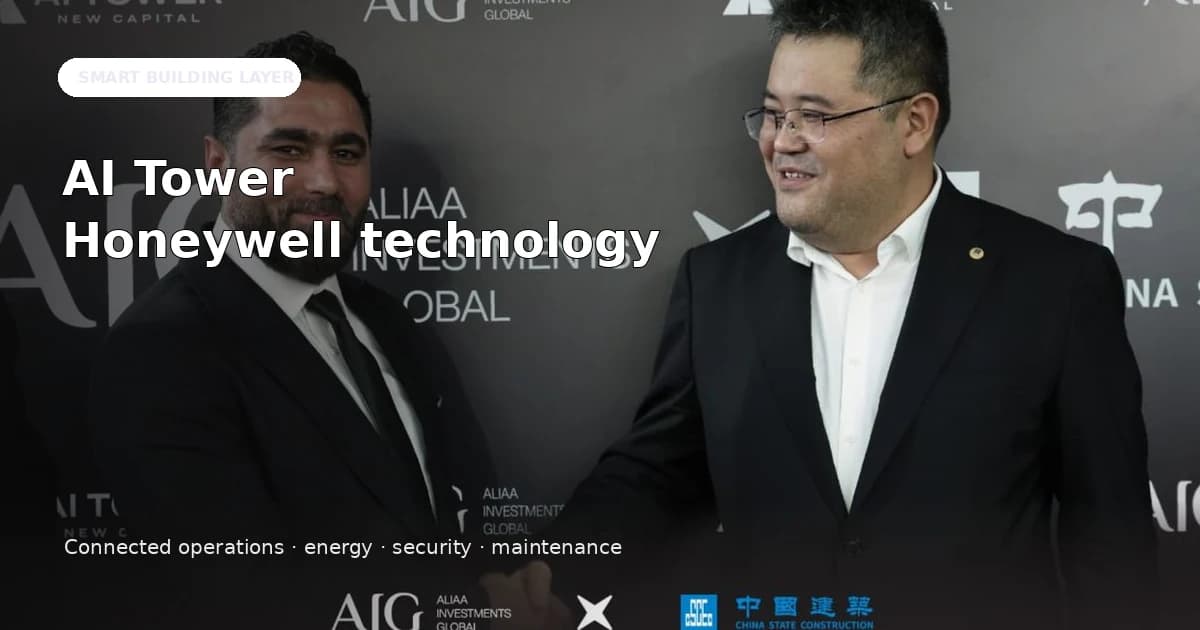
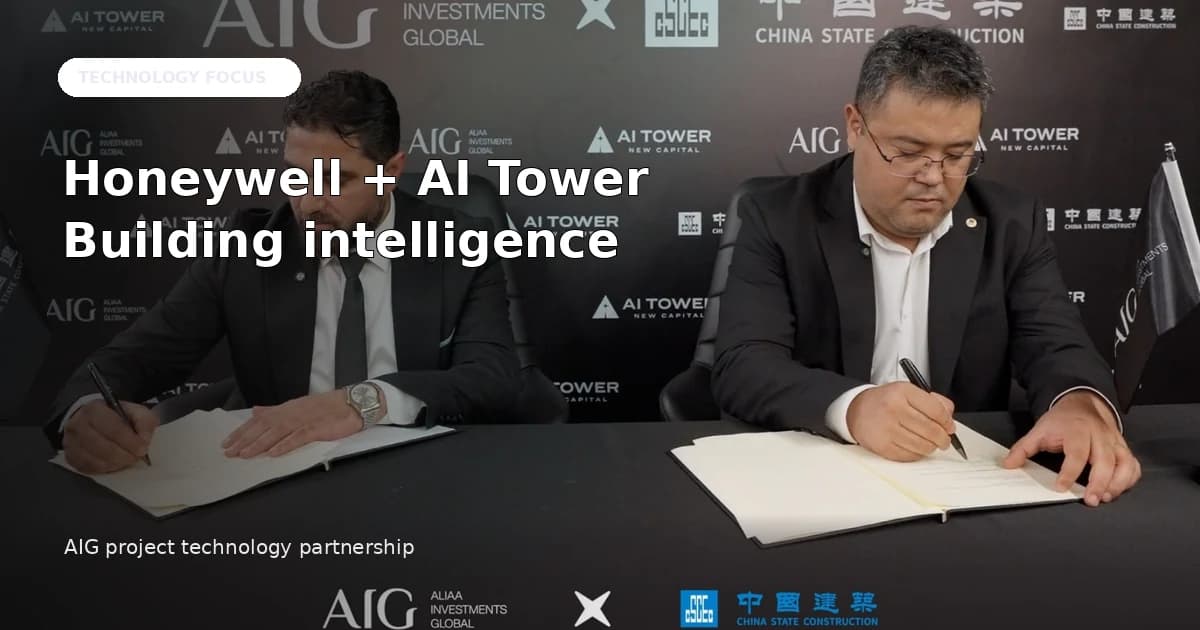
At AI Tower's 2026 launch, AIG announced a cooperation agreement with Honeywell around smart-building technology and digital transformation. AIG's live AI Tower page now names Honeywell as the project's technology provider and describes a connected digital infrastructure for core building functions.
The first-party page groups the intended intelligent layer around operations, security, energy, maintenance, connectivity, parking, and occupant experience. Those categories are specific enough to explain the operating idea of the tower, but they are not a substitute for final technical schedules. This article therefore uses AIG's published categories without inventing product names, sensor counts, energy savings, response times, or automation levels that are not stated.
Operating Layer
What connected building operations can mean
In a conventional building, systems can be installed as separate islands: access control, HVAC, energy metering, alarms, maintenance records, parking, and tenant services. The smart-building proposition becomes more useful when authorized systems can share reliable data and operating rules so teams see building conditions in context rather than through disconnected dashboards.
AIG describes AI Tower as using live performance information to identify patterns and anticipate operational needs. The practical questions for a future owner or tenant are therefore about integration and accountability: which systems are connected, what is monitored, who can act on alerts, how priorities are set, and how the operating team handles faults, overrides, privacy, and maintenance.
Performance
Energy and maintenance are where smart claims become measurable
Energy optimization and early fault detection are two areas highlighted on AIG's project page. They matter because high-rise mixed-use buildings carry continuous operating loads and multiple user types. Better visibility can help teams detect abnormal behavior, schedule maintenance, and manage equipment more consistently.
The important distinction is between capability and guaranteed outcome. A platform may enable monitoring or optimization, but actual performance depends on design, installation, commissioning, occupancy, setpoints, maintenance, staff response, and operating policies. Any promised saving, uptime target, or service level should be checked against a technical or contractual source before being used in an investment model.
Occupant Experience
Security, access, parking, and the daily user journey
AIG also describes smart access, monitoring, controlled movement, digital infrastructure, and managed parking. In a mixed-use tower, these functions matter because office staff, medical visitors, retail customers, hospitality users, service teams, and building management can have different arrival and access needs.
A well-integrated system should support a simpler and safer journey without creating unnecessary friction. Investors should look beyond the phrase 'AI operated' and ask how access permissions, guest management, parking, lifts, emergency procedures, privacy, and tenant systems will work together after handover.
Technical Due Diligence
What to verify before treating technology as investment value
The technology story becomes decision-grade when it is translated into a specification and operating responsibility. Ask which Honeywell platforms or approved systems are in scope, which systems remain supplied by others, what integrations are required, who commissions them, who owns the data, how cybersecurity is handled, and who maintains hardware and software over the building's life.
Also confirm the commercial consequences: service charges, maintenance contracts, replacement cycles, software subscriptions if any, tenant fit-out interfaces, and the process for system upgrades. Smart infrastructure can support long-term asset quality, but only when the operating model is funded and governed as carefully as the initial installation.
A useful review should also separate the base-building technology from systems installed later by tenants or specialist operators. Medical, retail, office, and hospitality occupiers may bring their own controls, networks, devices, and compliance requirements. Ask how those tenant systems can connect without weakening security, reliability, warranties, or the building operator's ability to maintain the shared infrastructure.
Decision Table
Smart-building claim vs. decision-grade evidence
Translate a technology headline into evidence you can review.
| Headline | Useful evidence | Question to ask |
|---|---|---|
| AI-operated tower | Documented automation scope and human operating procedures | Which decisions are automated, assisted, or manually approved? |
| Energy optimization | Metering design, control sequences, commissioning and reporting | How will performance be measured after occupancy? |
| Predictive maintenance | Asset data, fault detection scope and maintenance workflow | Who receives alerts and who is responsible for action? |
| Smart security | Access, monitoring, privacy and emergency integration | How are different user groups and sensitive areas managed? |
| Connected experience | Parking, access, lifts, tenant interfaces and support model | What happens when a system or network is unavailable? |
Investor Checklist
Honeywell technology due-diligence questions
Ask for documents that turn the technology concept into an operable building.
Scope
Confirm which Honeywell solutions and interfaces are actually included in the current project specification.
Integration
Identify which third-party building systems connect to the central operating layer and who owns integration responsibility.
Commissioning
Ask how functional testing, integrated systems testing, acceptance, and handover will be documented.
Cybersecurity and privacy
Confirm governance for access, updates, data retention, credentials, vendor support, and incident response.
Lifecycle cost
Review maintenance, support, replacement, licensing, training, and upgrade obligations where applicable.
Risk Control
Common mistakes to avoid.
Treating 'AI operated' as proof that every building function is autonomous.
Inventing energy savings or maintenance reductions that the public sources do not quantify.
Ignoring commissioning and systems integration between construction and operations.
Focusing on installation cost while ignoring long-term support and replacement obligations.
Using the partner name as a substitute for reviewing the exact technical scope.
About the Author
AIG Editorial Team
This guide was prepared by the Aliaa Investments Global editorial team to help investors organize their questions around development, intelligent real estate, delivery, operations, and long-term asset quality. Project-specific decisions should use current documents and qualified professional advice.
About Aliaa Investments GlobalReferences
Sources and first-party context.
These sources support the public context used in this article. Prices, availability, schedules, legal status, and project specifications can change and should be verified directly before a decision.
AIG — AI Tower
First-party description of Honeywell technology and the connected operating layer.
EconomicKey — AI Tower launch
June 2026 launch coverage describing AIG's Honeywell smart-building cooperation.
Daily News Egypt — AI Tower development update
July 2026 coverage connecting Honeywell with smart building management and AI technologies.
AIG — Smart Tower Investment in Egypt
Vendor-neutral internal guide for evaluating smart-building systems and operating quality.
FAQs
Questions about ai tower × honeywell.
Is Honeywell the technology partner for AI Tower?
Yes. AIG's current AI Tower page identifies Honeywell as the project's technology provider, and launch coverage describes a cooperation agreement for smart-building technology, building management, and digital transformation solutions. Exact final system scope should be checked in current technical documents.
What will Honeywell technology do in AI Tower?
AIG describes a connected operating layer covering building operations, security, energy, maintenance, connectivity, parking, and occupant experience. The public sources do not provide every final product model or performance guarantee, so those details should be verified before relying on them commercially.
Does AI Tower use artificial intelligence for building management?
AIG positions AI Tower as AI operated and says live systems will read building performance, detect patterns, and anticipate operational needs. The exact boundary between automated control, analytics, alerts, and human decisions should be confirmed from the final operating and technical documentation.
Why does smart-building technology matter to an investor?
It can support operational visibility, security, energy management, maintenance, tenant experience, and asset resilience. Investment value depends on actual integration, commissioning, operating quality, lifecycle cost, and user demand—not simply on the presence of a technology brand.
Related Reading
Continue through the AI Tower Project Guide cluster.
Start with the pillar for the complete framework, then use the related cluster guides for focused decisions.
AI Tower New Capital: Project Guide & 2026 Milestones
A source-led guide to AI Tower in Egypt's New Capital CBD, covering the 2026 launch, Honeywell smart-building technology, the CSCEC main-contractor agreement, location, and mixed-use concept.
Construction Update
AIG × CSCEC Collaboration: What It Means for AI Tower Execution
A concise source-led update on AIG appointing CSCEC as AI Tower's main contractor and the project's move from planning toward on-site execution in August 2026.
Project Launch
AI Tower Launch in New Capital: The 2026 Milestone Timeline
Follow the public 2026 AI Tower milestones: project launch, Honeywell smart-building partnership, development updates, and CSCEC's appointment as main contractor.
Project Overview
AI Tower in New Capital CBD: Location, 50 Floors & Mixed-Use Model
A source-led overview of AI Tower's New Capital CBD position, Mohamed Bin Zayed Axis location, 50-floor scale, and mixed-use business, healthcare, retail, and hospitality concept.
See the technology in the AI Tower project context
Review AIG's project page, then use current technical documentation for any specification or investment decision.