Open article contents
Article Contents
Pillar Guide
New Capital Investment GuideQuick Answer
Honeywell's name can be relevant to smart-building due diligence, but the investment question is not simply whether a project uses a major technology brand. Investors should verify the exact building-management, security, energy, maintenance, analytics, integration, commissioning, cybersecurity, support, and lifecycle-cost scope that will actually be delivered. Honeywell publicly offers connected building, BMS, EBI, Forge, energy, security, and predictive-maintenance capabilities, but a project-specific specification is still required before those capabilities can be translated into asset value.
Key Takeaways
What matters before you compare offers.
This page owns the broad Honeywell smart-building investment intent; the existing AI Tower × Honeywell page remains the project-specific source for AI Tower.
Honeywell's public building portfolio includes BMS, enterprise integration, cloud-connected analytics, remote operations, energy visibility, security, and predictive-maintenance tools.
A technology partner name does not prove which products, licenses, integrations, performance targets, or service levels are included in a specific property.
The strongest investor evidence is a documented technical scope plus commissioning, operating, cybersecurity, maintenance, and lifecycle-cost responsibilities.
Smart systems can support uptime, efficiency, security, and occupant experience, but actual results depend on design, installation, commissioning, staffing, occupancy, and maintenance.
Do not value a technology premium from marketing language alone; connect every claimed benefit to a measurable operating requirement or contract document.
Technology Context
What Honeywell's building-automation portfolio actually covers
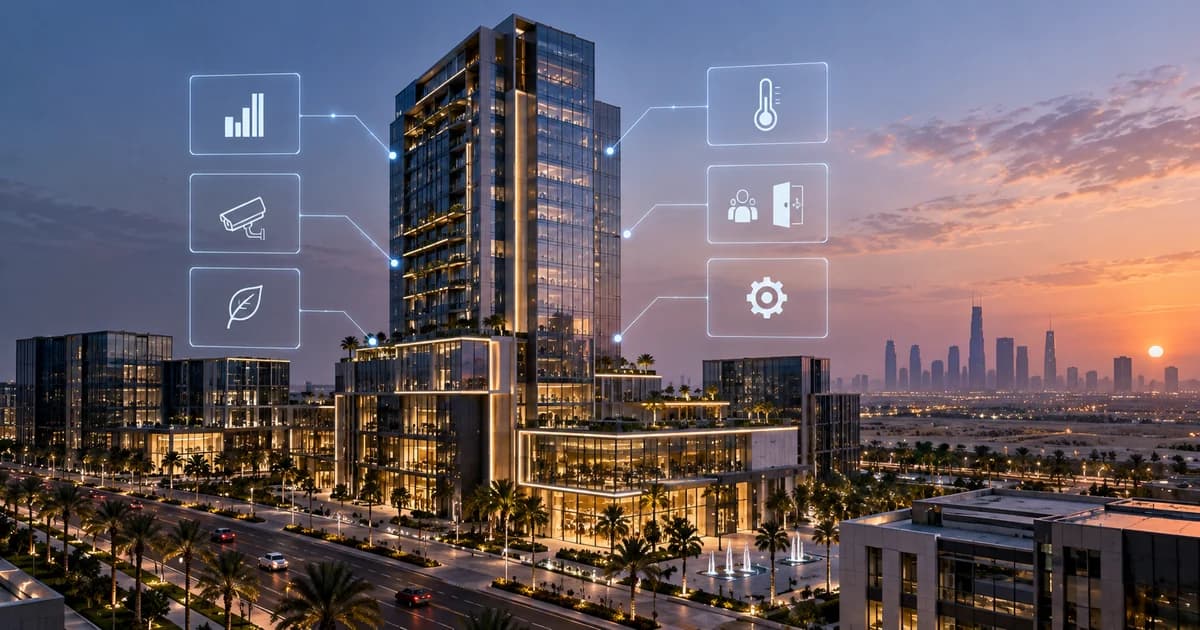
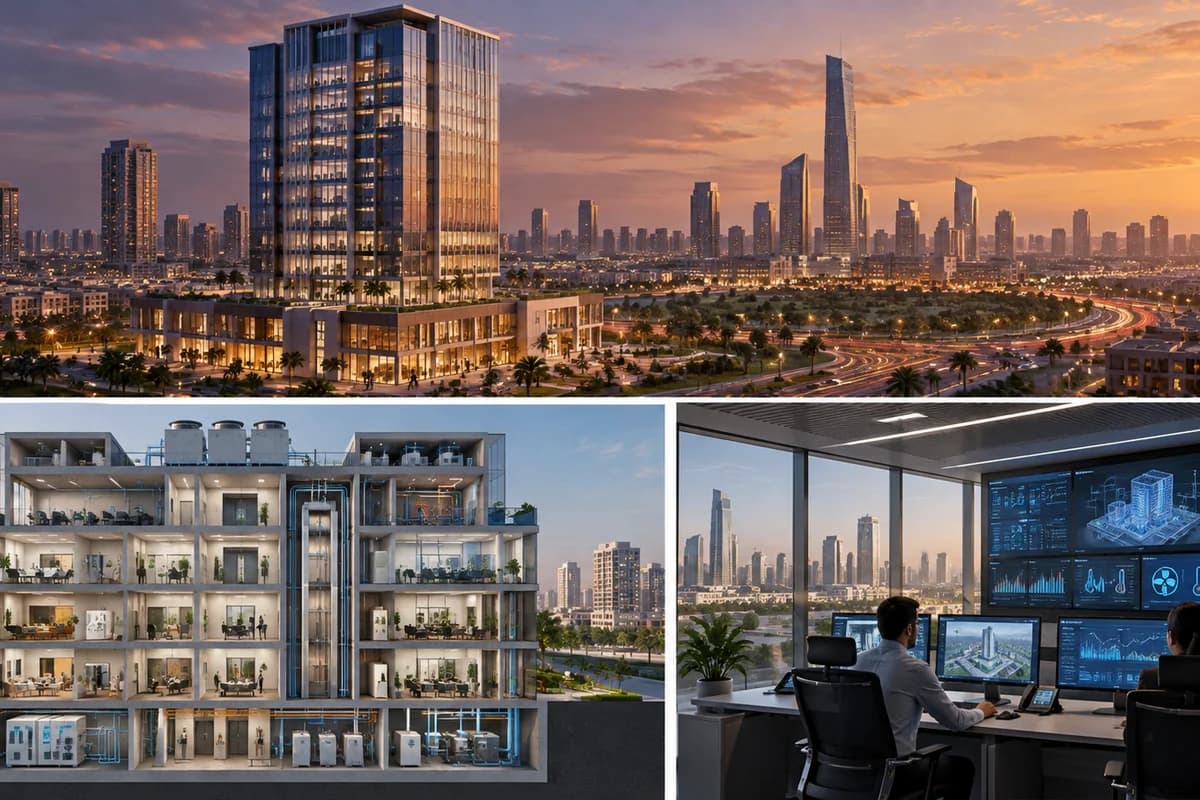
Honeywell's current building-automation material describes a connected operating model rather than one single device. Its public pages cover building management systems, Enterprise Buildings Integrator, Honeywell Forge connected solutions, remote building management, energy and carbon management, predictive maintenance, access and security integration, and multi-vendor building data. For an investor, the useful takeaway is that a smart-building platform can connect several operational layers that would otherwise be managed separately.
That does not mean every Honeywell-associated project receives the same architecture. One building may use a core BMS, another may add enterprise integration, cloud analytics, security, remote operations, or specialist controls. Project teams can also combine Honeywell systems with equipment supplied by other manufacturers. Therefore, the brand is the beginning of due diligence, not the end of it.
For New Capital towers, the value question is whether the selected systems solve real operational problems: controlling comfort, detecting faults, reducing unplanned downtime, coordinating alarms, managing access, measuring energy, supporting facilities teams, and giving operators enough visibility to act quickly. If the specification cannot explain which problems are being solved, the technology story is not yet decision-grade.
Practical checks
- Ask for the exact BMS and integration scope rather than a generic 'smart building' statement.
- Separate base-building controls from tenant-installed systems and specialist operator equipment.
- Confirm which functions are local, cloud-connected, analytics-led, automated, or manually approved.
- Check how system ownership changes from contractor commissioning to long-term property management.
Investment Lens
Where smart-building systems can influence asset quality
A commercial real-estate investor normally cares about the technology only when it influences operating reliability, tenant satisfaction, controllable costs, compliance, or the long-term competitiveness of the asset. A well-integrated building can help operators see alarms and asset conditions across HVAC, lighting, access, security, fire and life-safety interfaces, energy, or other supported systems from a more coordinated operating environment. Honeywell's own connected-solutions material emphasizes visibility, predictive analytics, uptime, energy optimization, and remote monitoring as examples of what connected building intelligence can support.
The word 'support' matters. Technology can expose abnormal energy use or asset faults, but savings do not happen automatically. A team must configure the controls correctly, commission sensors and sequences, respond to alerts, maintain equipment, update software, manage user access, and keep data trustworthy. The same platform can perform differently across two buildings because the operating discipline is different.
When comparing two towers, investors can therefore treat technology as one layer of asset quality alongside location, tenant demand, construction quality, vertical transport, parking, life safety, service charges, operator capability, and financial terms. It should strengthen an already coherent building proposition rather than compensate for weak fundamentals.
Delivery Evidence
Commissioning is where a smart-building promise becomes an operating system
A sophisticated specification can still underperform if commissioning is weak. Integrated systems testing should demonstrate that sensors, controllers, alarms, schedules, access rules, dashboards, equipment interfaces, and emergency sequences work as intended under normal and abnormal conditions. The investor does not need to become a controls engineer, but should understand who is responsible for testing, acceptance, documentation, training, and defect resolution.
Ask for the commissioning plan, interface matrix, functional testing scope, handover documentation, software and hardware responsibility, operator training plan, and the process for updating the system after occupancy. If the building relies on cloud services or analytics, also ask what connectivity, licensing, data retention, vendor support, and subscription responsibilities apply over time.
For a mixed-use tower, commissioning should consider different operating patterns across offices, retail, medical, hospitality, parking, public areas, plant rooms, and after-hours zones. One generic sequence may not suit every use. The technology layer becomes more valuable when the operating rules reflect how the building will actually be occupied.
Lifecycle Risk
Cybersecurity, support, upgrades, and replacement costs belong in the investment model
Connected buildings depend on networks, credentials, software, integrations, remote access, devices, and data. Investors should ask who administers accounts, how software is patched, how vendors access the system, how incidents are handled, how backups are protected, and which interfaces are isolated from tenant networks. These questions are operational rather than promotional, but they can affect resilience and long-term management risk.
Lifecycle cost is equally important. Some building systems require recurring support, cloud services, specialist maintenance, sensor replacement, controller upgrades, cybersecurity updates, training, or vendor contracts. A low first-cost installation can become expensive if support is fragmented, while a more integrated system can be easier to operate when responsibilities are clear. Do not assume the technology premium is justified until recurring obligations are included in the ownership model.
Investors should also confirm what happens if a system becomes obsolete, a supplier changes, or a tenant requires an interface that was not part of the original design. Open protocols and documented integration can reduce lock-in risk, but the exact architecture must be reviewed rather than assumed from a product family name.
Cannibalization Boundary
Keep general Honeywell research separate from AI Tower's project-specific technology page
AIG already has a dedicated AI Tower × Honeywell article that owns the project-specific query. That page focuses on what AIG currently says about Honeywell's role in AI Tower, the connected operating layer, and which technical details still require project documents. This new article intentionally does not repeat that project narrative.
Instead, this page owns the broader investor question: how to evaluate Honeywell smart-building technology in an Egyptian property investment. Readers researching AI Tower should use the project article for current partner scope and this guide for the wider technical due-diligence framework. Separating those intents reduces cannibalization and gives both pages a clearer reason to rank.
Decision Table
Smart-building claim vs investor-grade evidence
Use this table to convert a technology headline into an evidence request.
| Claim | Evidence to request | Investor question |
|---|---|---|
| Building management system | Points list, sequences, graphics, alarms, interface matrix | What is actually monitored and controlled? |
| Predictive maintenance | Asset data, analytics scope, fault workflow, maintenance responsibility | Who receives a prediction and what action follows? |
| Energy optimization | Metering, trend data, control sequences, commissioning and reporting | How is performance measured without inventing savings? |
| Integrated security | Access, CCTV, visitor, alarm, privacy and emergency interfaces | Which systems are integrated and who governs access? |
| Cloud-connected operations | Hosting, connectivity, user roles, backups, support and licensing | What recurring cost and cybersecurity responsibility applies? |
Investor Checklist
Honeywell technology due-diligence checklist
Ask these questions before assigning a financial premium to a smart-building specification.
Exact scope
Request the current Honeywell product, platform, subsystem and interface schedule for the project.
Integration responsibility
Identify who connects HVAC, meters, access, security, fire interfaces, lifts, parking and tenant systems where applicable.
Commissioning
Review functional testing, integrated testing, acceptance criteria, training and final handover records.
Cybersecurity
Confirm remote access, credentials, patching, backups, data governance and incident-response responsibilities.
Operating team
Understand who will monitor, respond, maintain and optimize the systems after occupancy.
Lifecycle cost
Include maintenance, licenses, support, replacements, upgrades, training and connectivity in the ownership model.
Risk Control
Common mistakes to avoid.
Treating the Honeywell name as proof that every available Honeywell capability is included.
Publishing guaranteed energy savings, uptime, maintenance reductions, or ROI without a project-specific verified source.
Ignoring commissioning and assuming installation alone creates an intelligent building.
Failing to separate landlord systems from tenant technology and specialist operator systems.
Ignoring cybersecurity, software support, subscriptions, and replacement cycles in long-term cost analysis.
About the Author
AIG Editorial Team
This guide was prepared by the Aliaa Investments Global editorial team to help investors organize their questions around development, intelligent real estate, delivery, operations, and long-term asset quality. Project-specific decisions should use current documents and qualified professional advice.
About Aliaa Investments GlobalReferences
Sources and first-party context.
These sources support the public context used in this article. Prices, availability, schedules, legal status, and project specifications can change and should be verified directly before a decision.
Honeywell — Connected Building Solutions
Official Honeywell overview of integrated building intelligence, multi-vendor connectivity and predictive analytics.
Honeywell — Building Services
Official Honeywell context for EBI, managed services, maintenance and cloud-connected building intelligence.
Honeywell Building Automation — Forge Connected Solutions
Official capabilities covering remote building management, predictive maintenance, energy and connected operations.
Honeywell — Building Management Systems
Official BMS product-family context for control, monitoring, alarms and energy efficiency.
AIG — AI Tower
First-party project page identifying Honeywell as AI Tower's technology partner and describing the connected operating concept.
AIG — AI Tower × Honeywell
Internal project-specific article kept separate from this broader investment guide.
ACUD — New Capital
Official New Capital smart-city and services context.
FAQs
Questions about honeywell smart building investment.
What does Honeywell do in smart buildings?
Honeywell publicly offers building management, enterprise integration, connected analytics, remote building operations, energy management, security, and predictive-maintenance capabilities. The exact combination varies by project, so investors should verify the delivered specification rather than assume the full portfolio is included.
Does Honeywell technology automatically increase property value?
No technology brand automatically increases value. Smart systems can support uptime, efficiency, security, maintenance and occupant experience, but asset value still depends on demand, location, build quality, operations, commissioning, lifecycle cost and the actual performance of the installed systems.
Is this the same as the AI Tower Honeywell article?
No. The AI Tower × Honeywell page owns the project-specific partnership and technology query. This guide owns the broader Honeywell smart-building investment and due-diligence intent across Egyptian real estate, which helps avoid cannibalization.
What documents should an investor ask for?
Request the current technical specification, points and interface schedules, commissioning plan, operator responsibilities, support and maintenance scope, cybersecurity controls, handover documents, and any recurring software or service obligations relevant to the exact property.
Related Reading
Continue through the New Capital Investment cluster.
Start with the pillar for the complete framework, then use the related cluster guides for focused decisions.
New Capital Investment Guide
A practical guide for investors evaluating Egypt’s New Administrative Capital, CBD growth, smart towers, mixed-use projects, risk factors, and long-term real estate value.
Location Strategy
New Capital CBD Investment: What Actually Drives Value?
Understand the location, accessibility, business activity, building operations, and delivery factors that shape New Capital CBD investment decisions.
Unit Comparison
Commercial vs Administrative Units in New Capital
Compare commercial and administrative units in the New Capital by demand source, operating needs, visibility, tenant profile, risk, and exit strategy.
Intelligent Real Estate
Smart Tower Investment in Egypt: What Systems Matter?
A practical guide to evaluating smart tower investment in Egypt through building management, energy, security, maintenance, data, and operating quality.
Translate smart-building claims into a technical checklist
Use the exact specification, commissioning scope, operating model and lifecycle responsibilities before assigning a premium to the technology layer.